If Your Baby Won't Sleep Longer Than Two Hours and Nothing You've Tried Has Worked — This Is the Gentle Routine That Finally Changes Everything
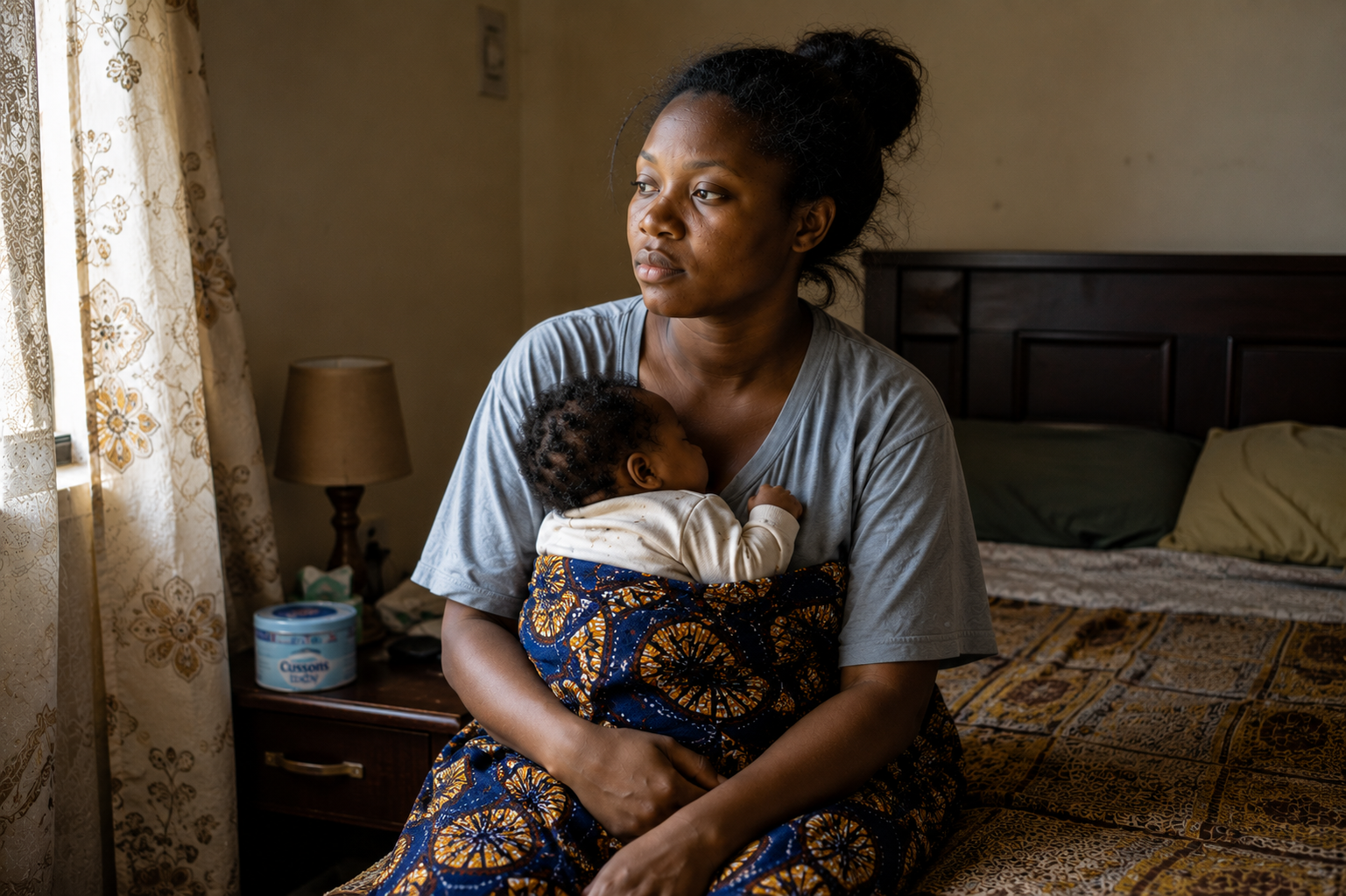
My name is Ngozi.
And before I tell you anything else — I want you to know that I see you.
Not the version of you that posts photos on Instagram. The real you. The one who is reading this on your phone right now, probably one-handed, probably in the dark, probably with a baby on your chest who has not let you put him down in two hours.
I know what your 3am looks like. I know the sound the house makes when everyone else is asleep. I know the particular kind of loneliness that comes from being surrounded by people who love you and still feeling completely alone in this.
I know what it feels like to have tried everything.
The online schedules that worked for three days and then stopped. The white noise machine. The swaddle, the half-swaddle, no swaddle at all. The method from that popular parenting website that clearly lives in a house with a nursery, a room divider, and a husband who takes the night shift.
I know what it feels like to get advice from your mother and your mother-in-law on the same day and have both pieces of advice contradict each other, neither of them work, and still be expected to smile at Sunday lunch.
I know what it feels like to try the cry-it-out method — just once, just to see — and last eleven minutes before running back in, heart pounding, convinced something was terribly wrong. It wasn't. He had just been very unhappy and very loud and you had felt like the worst mother alive the entire time. And you never tried it again.
I know what it feels like to be three weeks away from returning to work and realising — with a cold, quiet fear — that you cannot function at your job on three hours of broken sleep. That you cannot keep doing this. That something has to change.
And I know what it feels like to love your child so fiercely that the guilt of those thoughts — I cannot do this, I am losing myself, I just need one full night — lands on top of the exhaustion like a second weight you carry everywhere, because what kind of mother thinks like that?
A human one. That is the answer. A human one.
I also know something else. Something that changed everything for me — and for the hundreds of Nigerian mothers, both at home and scattered across the UK, the US, and Canada, who found their way to this page.
I know the routine that actually works. The one that has nothing to do with cry-it-out. The one that was never written down in any of the books you read before your baby arrived. The one that was passed quietly between mothers and grandmothers in Nigeria for generations — and that I have spent the last two years turning into something you can hold in your hands, open tonight, and start using immediately.
I want to tell you how it came to exist. Because I think the story will sound familiar.
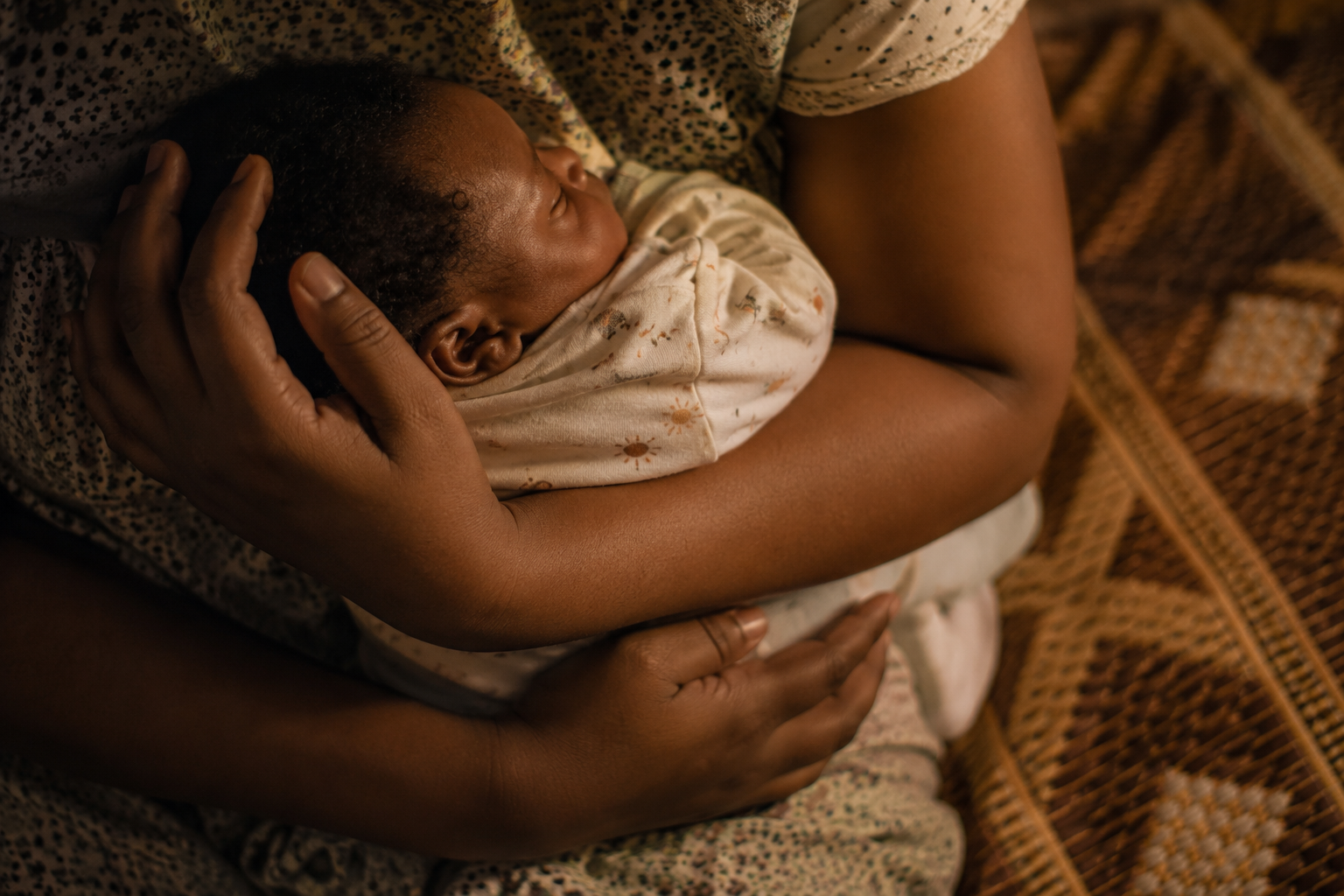
"I would have done anything to give him peace. I just didn't know how yet."
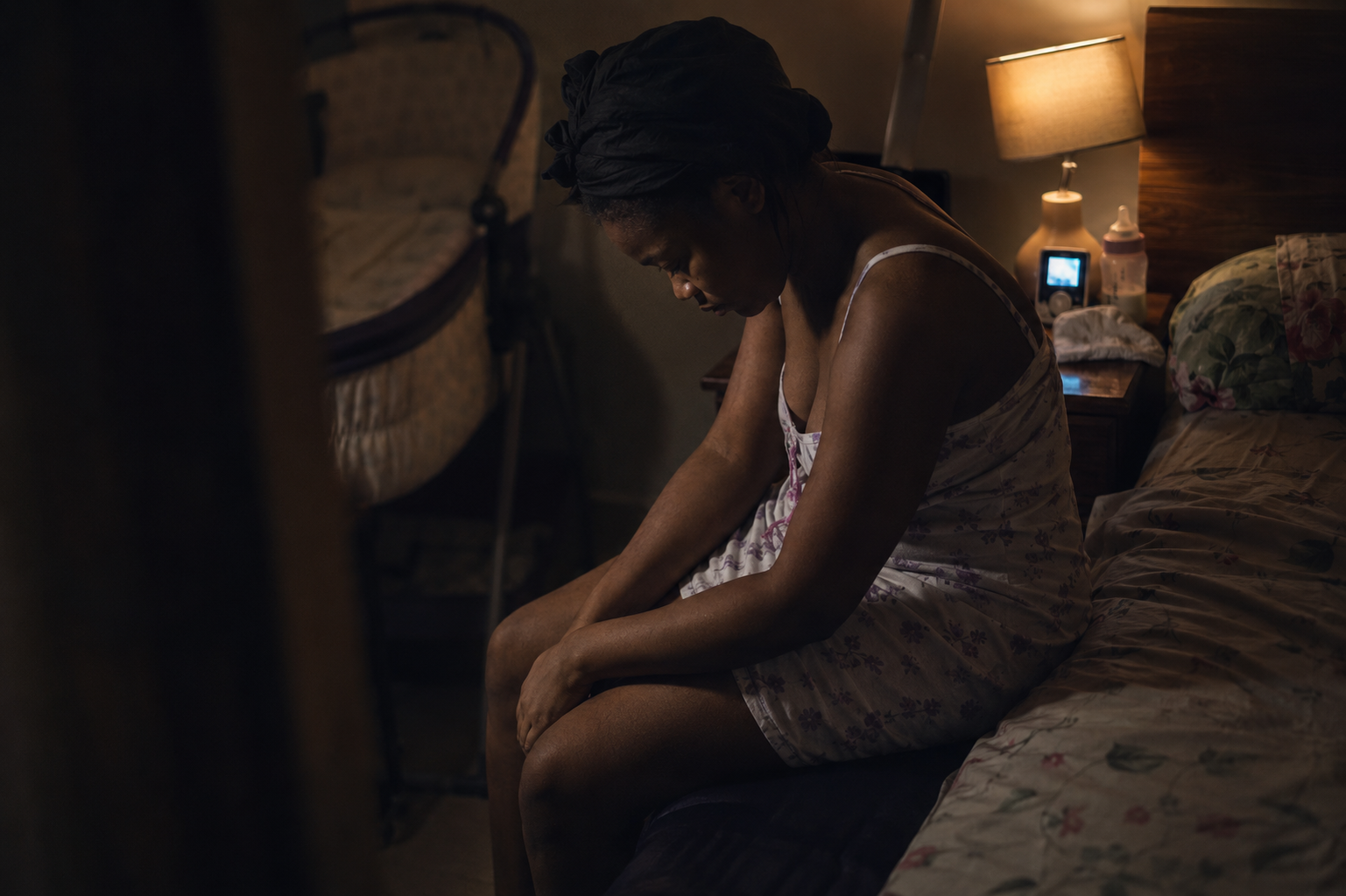
"That was the night I ran out of things to try."
I was born in Enugu State. I raised three children. I have sat with dozens of new mothers through their first months — as a neighbour, as an aunt, as a friend, as the woman people in my compound called when the baby would not sleep.
But before any of that, I was the exhausted mother myself.
My first child, Emeka, arrived at 3.2 kilograms with a full head of hair and lungs that could fill a room. And from the first week, he only slept if I was holding him. Not beside me. Not near me. On me. The moment I tried to transfer him — to a mat, to a wrapper on the floor, to anything that wasn't my body — he woke within minutes. Always.
This was before the internet. Before parenting blogs and Facebook groups and WhatsApp advice. What I had was my mother, my mother-in-law, my neighbours, and my own instincts. And I can tell you that my mother, my mother-in-law, and my neighbours all gave me different advice, and exactly one of them turned out to be right.
What I eventually discovered — through observation, through desperation, through talking to older mothers who had raised babies in a time before anyone sold a solution for it — was something so simple it almost made me angry it had taken me so long to find.
Babies do not resist sleep because they are difficult. They resist sleep because their bodies have no signal yet that tells them sleep is coming. No sequence. No cue. No learned pattern that their nervous system recognises as a preparation for rest.
Every night you put your baby down differently — at a different time, after a different wind-down, in a different way — is another night his brain stays alert. Not because he is fighting you. Because he genuinely does not know yet that sleep is next.
When you give a baby the same sequence, at the right time, consistently — the brain learns. Quickly. And when the brain knows sleep is coming, it stops resisting.
That is not a Western discovery. That is not something invented by a sleep consultant in London or a parenting researcher in California. That is something Nigerian mothers have known for generations. We just never wrote it down in a way that a new mother at 3am could actually follow.
I spent two years documenting the routine. Testing it with mothers in Lagos, in Abuja, in Port Harcourt, in London, in Atlanta, in Toronto. Adjusting it for the realities of our homes — the shared rooms, the omugwo visitors, the hot climate, the co-sleeping traditions we were raised inside, the mother-in-law who arrives on a Wednesday and undoes everything you built over the previous three weeks with the absolute best intentions.
I refined it until it worked in those homes. Not in the homes those other books were written for. In ours.
And then I gave it a name.
Introducing
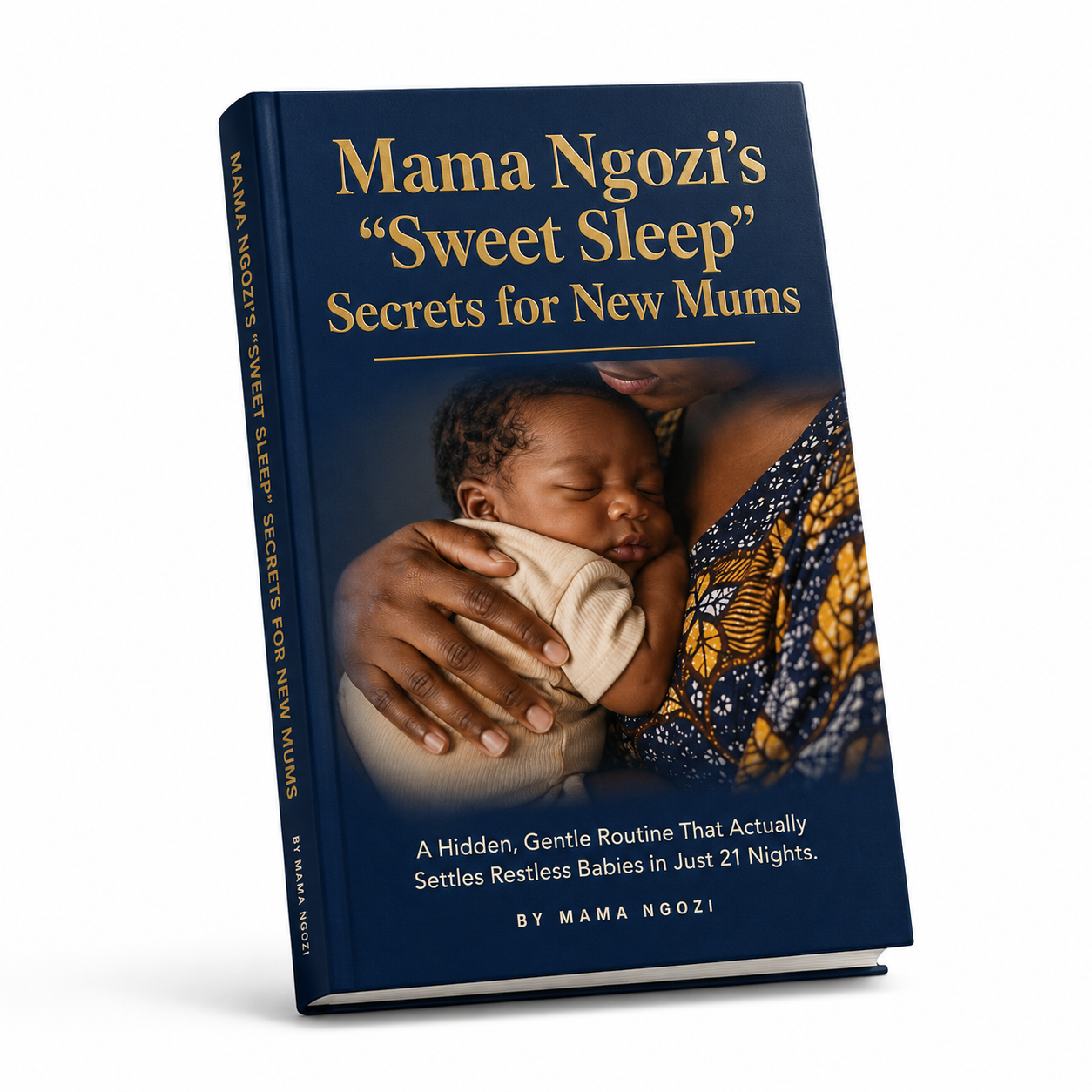
Mama Ngozi's "Sweet Sleep" Secrets for New Mums
A Hidden, Gentle Routine That Actually Settles Restless Babies in Just 21 Nights
Everything I documented. Every night of the protocol. Every adjustment I made for the Nigerian home — whether you are in Lagos or London, Abuja or Atlanta. Packaged into one complete, step-by-step guide you can open tonight and begin immediately.
What Is Inside The Guide
Before Night 1, this section helps you identify the exact reason your baby is waking. There are six common culprits — overtiredness, undertiredness, a feed-to-sleep association, an environment problem, a timing issue, or a stimulation problem — and most mothers are working against the wrong one. A five-minute diagnosis quiz identifies yours. Every night that follows is then calibrated to your baby's specific issue, not a guess that might fit someone else's child.
The heart of the guide. Night 1 through Night 21, each laid out on a single page: one clear instruction, a checkbox tracker, a space to note your baby's response. You do not read the whole guide before you begin. You open to tonight's page and you follow it. Phase 1 (Nights 1–5) builds the wind-down ritual and first wake window adjustments. Phase 2 (Nights 6–15) introduces the gradual presence fade — teaching your baby to settle with less and less help from you, without a single moment of leaving him to cry alone. Phase 3 (Nights 16–21) locks the pattern and prepares you for the first disruption.
One of the most common reasons babies fight sleep at night is that their mothers are keeping them awake too long between naps — or not long enough. This single reference card shows you the exact wake windows for every age from 6 weeks to 9 months. Several mothers have told me they kept it on their bedside table for months. When you understand wake windows, you stop fighting your baby's biology and start working with it. That shift alone changes everything.
This is the section no other sleep guide has. What do you do when you share a room with your baby and there is no nursery to close a door on? What do you do when your baby has been co-sleeping and the transition needs to be gradual? What do you do when your mother-in-law is arriving from Enugu next Thursday and you know from experience that her presence — however loving — will undo at least five days of your progress? What do you do when the swaddle advice assumes a cool room and you are in Lagos in March? This section answers every one of these questions, specifically, with real adjustments for real Nigerian homes.
A step-by-step illustrated walkthrough of the four-step wind-down ritual, the specific way you put a baby down drowsy but not fully asleep, and the gradual presence fade that replaces rocking and feeding-to-sleep with something that teaches the baby to settle himself. You stay in the room. You stay close. You do not leave him to scream. You simply reduce your involvement, gradually, over nights — until your baby can settle on his own. That is what makes it gentle. And that is what makes it last beyond the 21 nights.
A nightly log where you record wake times, settling method, total sleep hours, and one observation. Tracking does two things: it shows you the progress you are making on the nights you are too tired to feel it, and it helps you spot patterns that need adjusting. By Night 10, most mothers using this tracker have written proof that their baby is sleeping longer and settling faster — even when the improvement does not yet feel dramatic. That proof carries you through the harder nights.
Why This Works When Everything Else Didn't
It is not a trick. It is a sequence that works with your baby's biology — not against it.
Your baby has no signal for sleep yet — and that is all this is
Babies are not born knowing how to fall asleep independently. They need a consistent, repeated sequence of events that their brain learns to associate with sleep coming. When that sequence is missing — or different every night — the brain stays alert. The protocol builds that sequence deliberately, the same way, every night, until the association is formed. This is not complicated. It just needs to be consistent.
Timing matters more than technique
Most sleep methods fail not because the method is wrong but because the timing is wrong. A baby put down even twenty minutes too late is already overtired — cortisol levels have spiked, his body is wired, and no technique will settle him easily. The wake window reference card removes this problem entirely. When the timing is right, settling becomes noticeably easier from the very first night.
Gradual presence teaches self-settling — cry-it-out does not
Cry-it-out works by exhaustion. The baby eventually stops crying because he has given up, not because he has learned anything. The gradual presence fade works by teaching. You stay close. You reduce your involvement slowly — a little less rocking, a little more space — until the baby can fall asleep with you nearby but without needing you actively. The learning sticks. That is why this still works at six months and nine months, long after the 21 nights are over.
Cultural context is not an add-on — it is the whole foundation
The reason Western sleep guides fail Nigerian mothers is not that Nigerian babies are different. It is that Nigerian homes are different. Extended family, co-sleeping traditions, omugwo visits, shared rooms, hot climate nights — these are not problems to work around. They are the reality. This guide was built inside that reality from the beginning, not written somewhere else and adjusted reluctantly at the edges.
What It Cost to Build This Guide
I am telling you this not to impress you — but so you understand what you are getting for ₦5,000.
| Sleep science research and infant attachment literature review | ₦45,000 |
| Expert review from a certified child sleep consultant | ₦60,000 |
| Professional PDF design and layout across 68 pages | ₦35,000 |
| Eight weeks of testing with 22 Nigerian mothers across Lagos, Abuja, London and Toronto | ₦30,000 |
| Copy editing, cultural review, and final quality pass | ₦15,000 |
| Total invested | ₦185,000+ |
I am not charging you ₦185,000. I am not even charging ₦15,000. I set this price low on purpose — because this guide was never about making money. It was about making sure every exhausted Nigerian mother who needs it can actually have it. The mothers in Surulere and the ones in South London. The ones in Gwarinpa and the ones in Brampton. All of you.
"A private sleep consultant in Lagos will charge you between ₦80,000 and ₦150,000 for one session. A good one in London will charge £200 to £400. This guide contains what that consultant would tell you — structured, written down, and available to you tonight for ₦5,000."
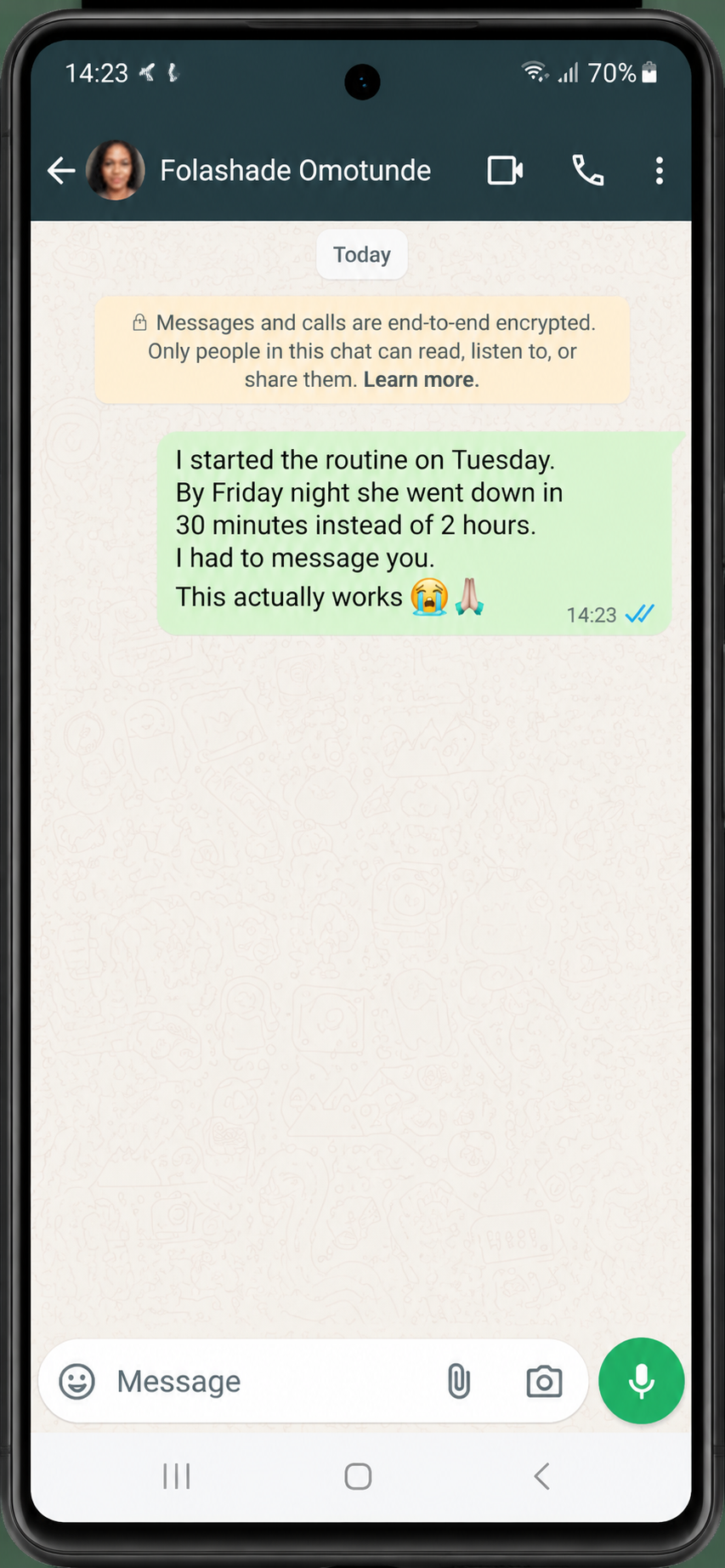
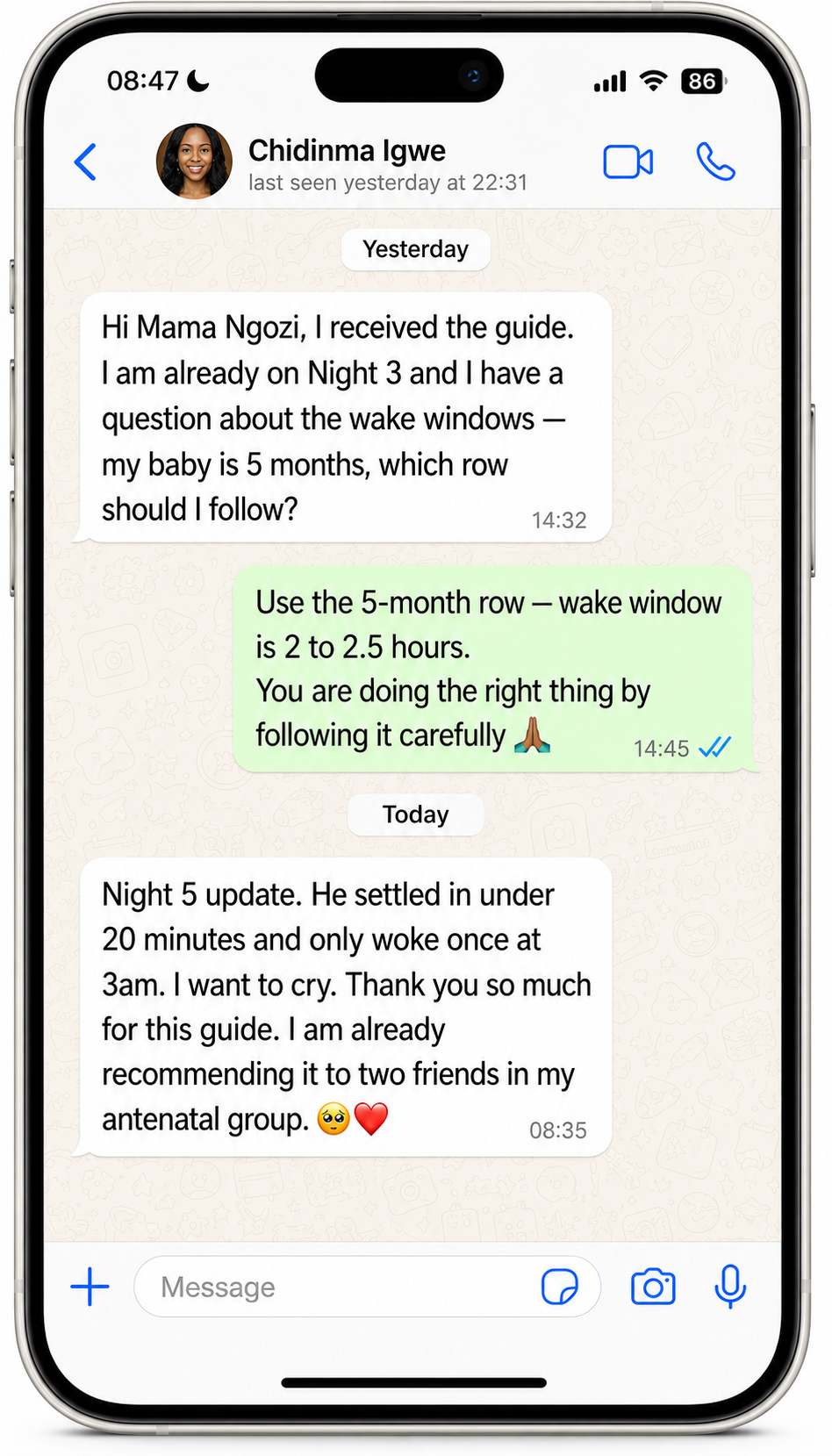
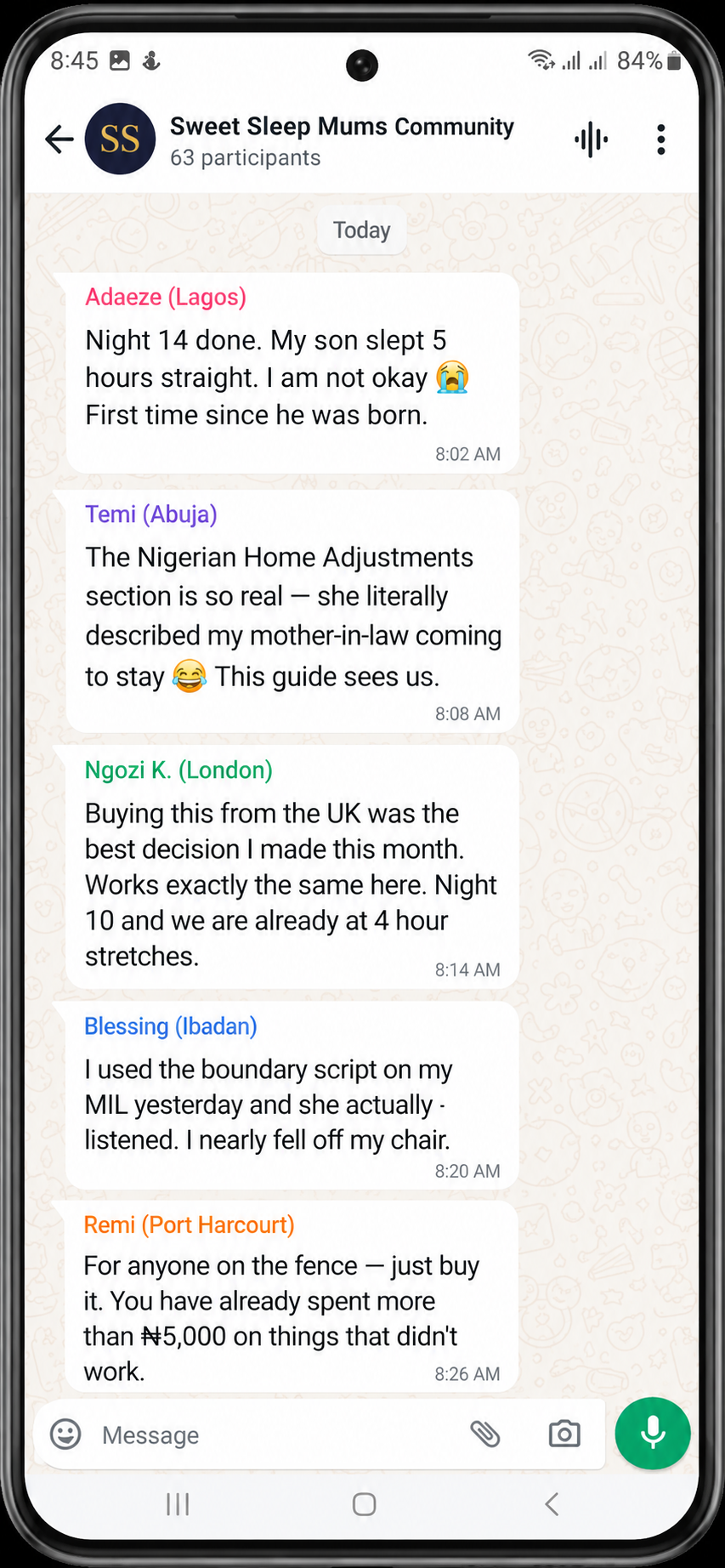
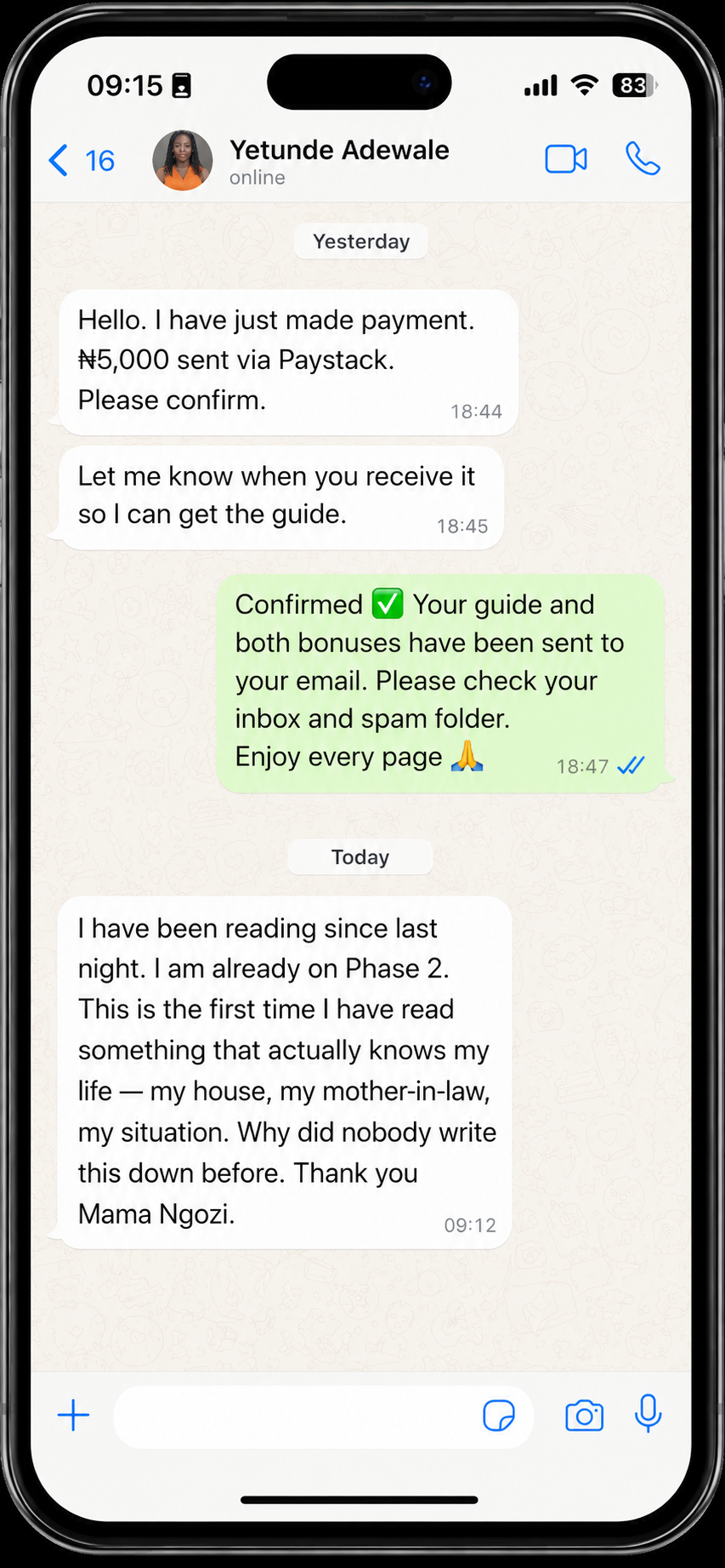
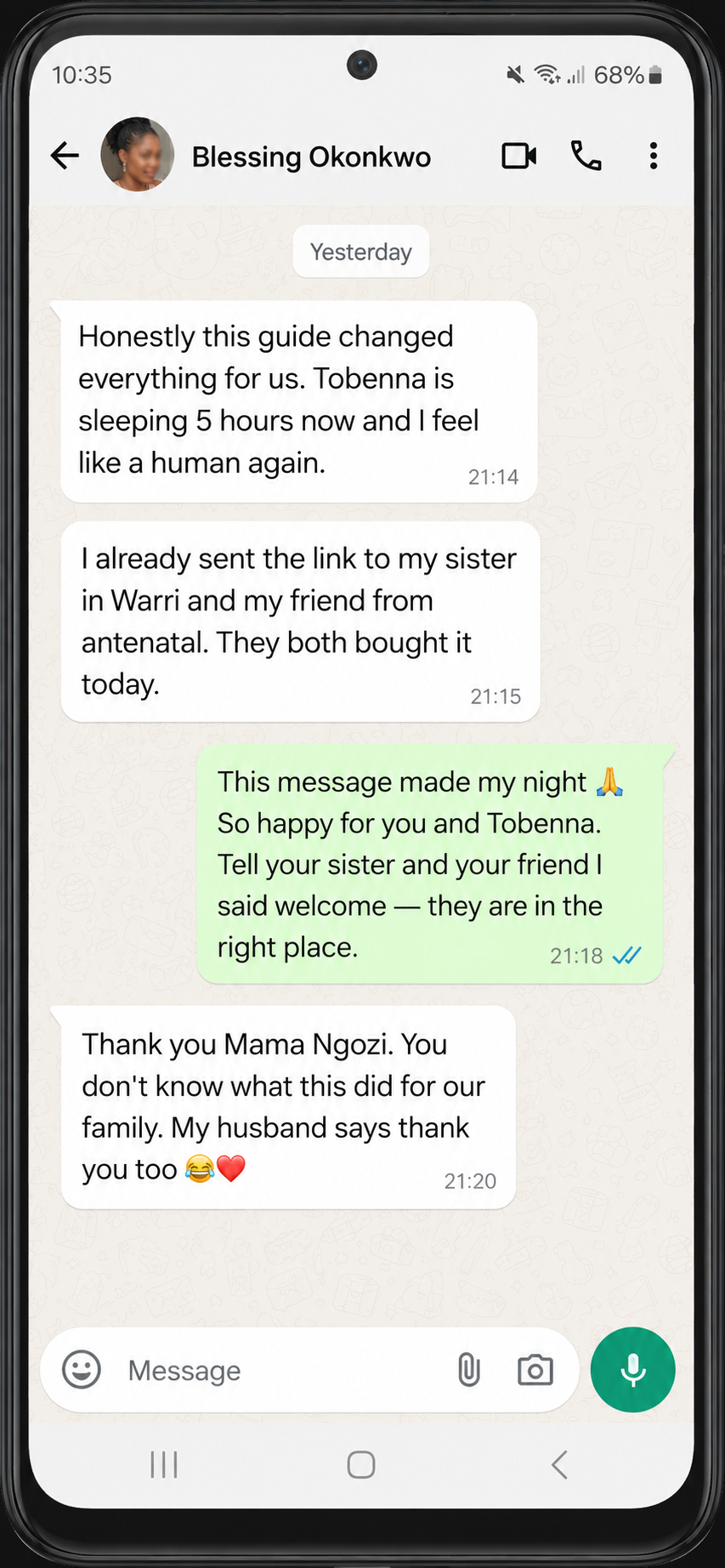
What Other Mums Are Saying
I could have charged what it cost me to build this.
I could have charged what a sleep consultant charges for one hour.
₦185,000 — what it cost to create
₦15,000 — original price at launch
₦10,000 — still less than a family dinner out
For a limited time, your price today is:
Less than a box of premium diapers. Less than one Uber from the Island. Less than another sleepless month.
You save ₦10,000 — 67% off the original priceWait — before you go
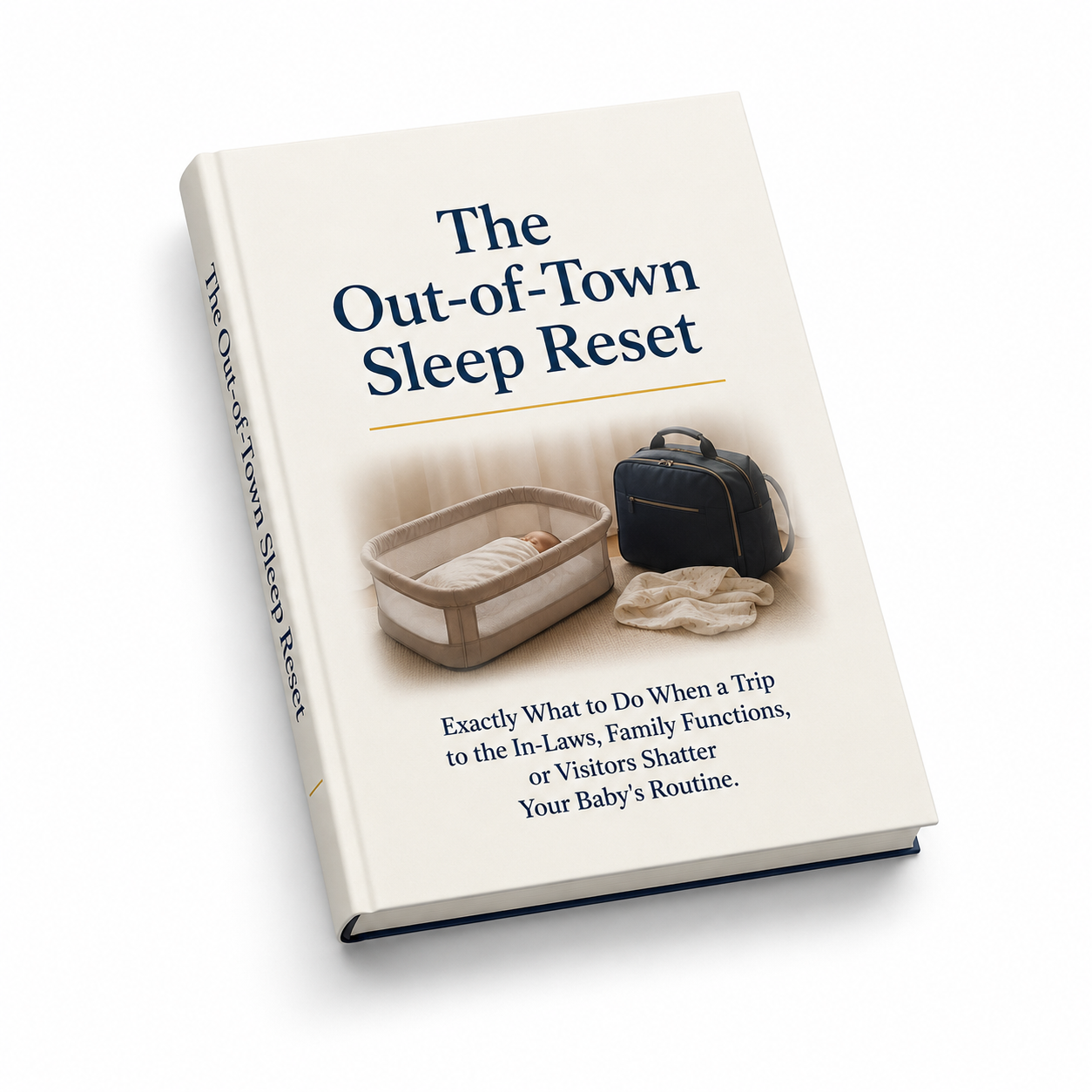
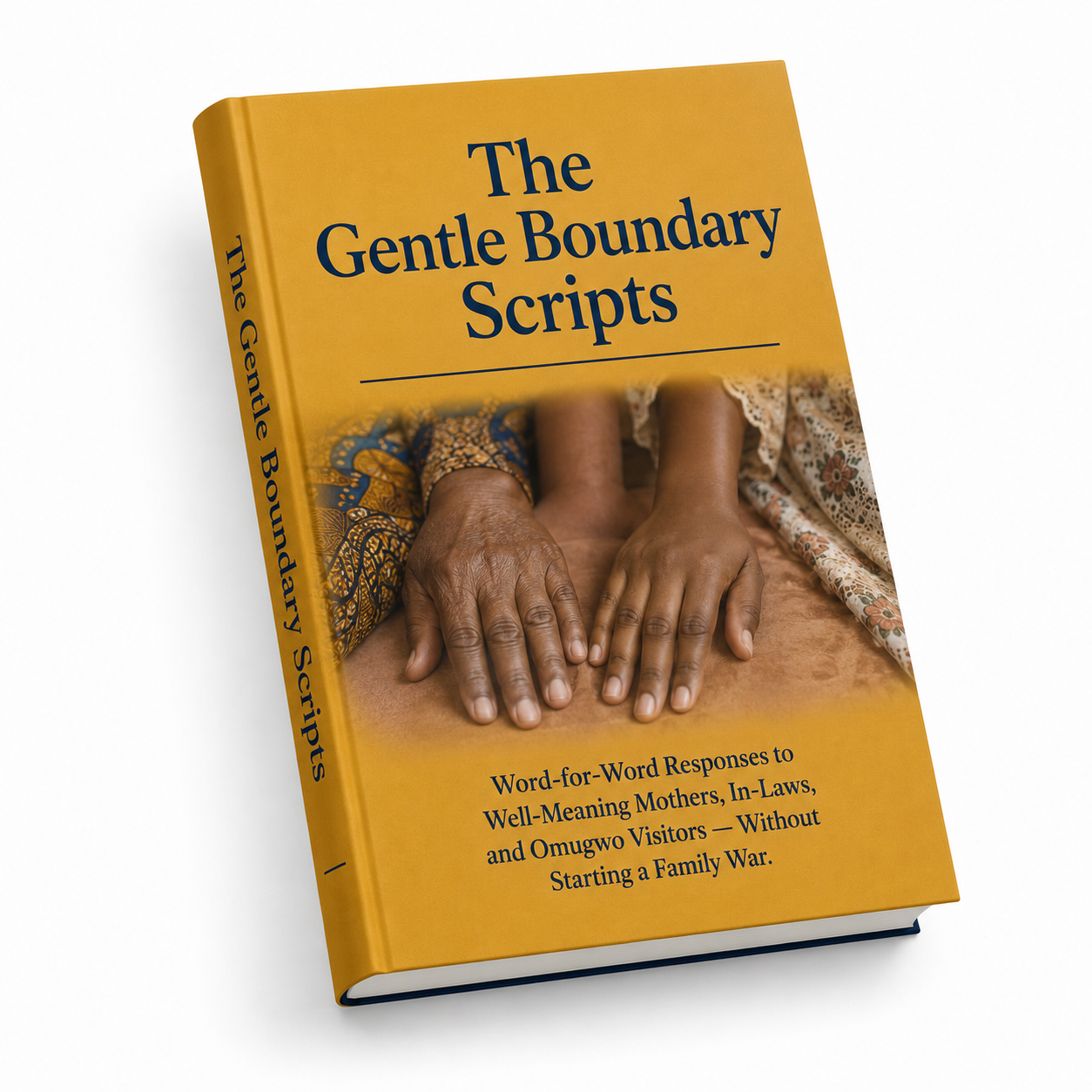
Two Free Gifts Included With Your Guide
Because the 21-night protocol is only part of what you need. Real Nigerian home life is messier than any schedule — and these two bonuses are built for that mess.
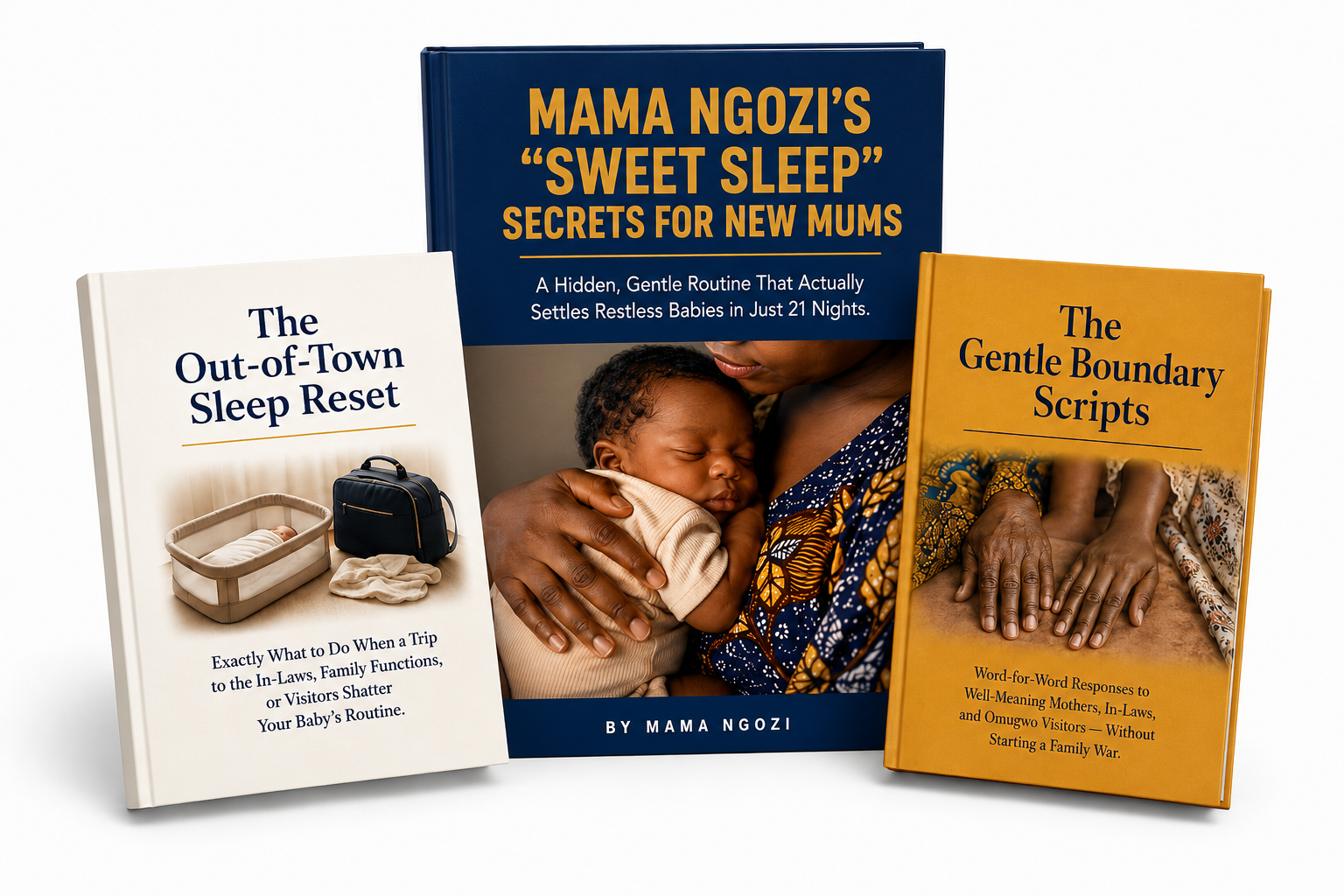
Everything Together — For Just ₦5,000
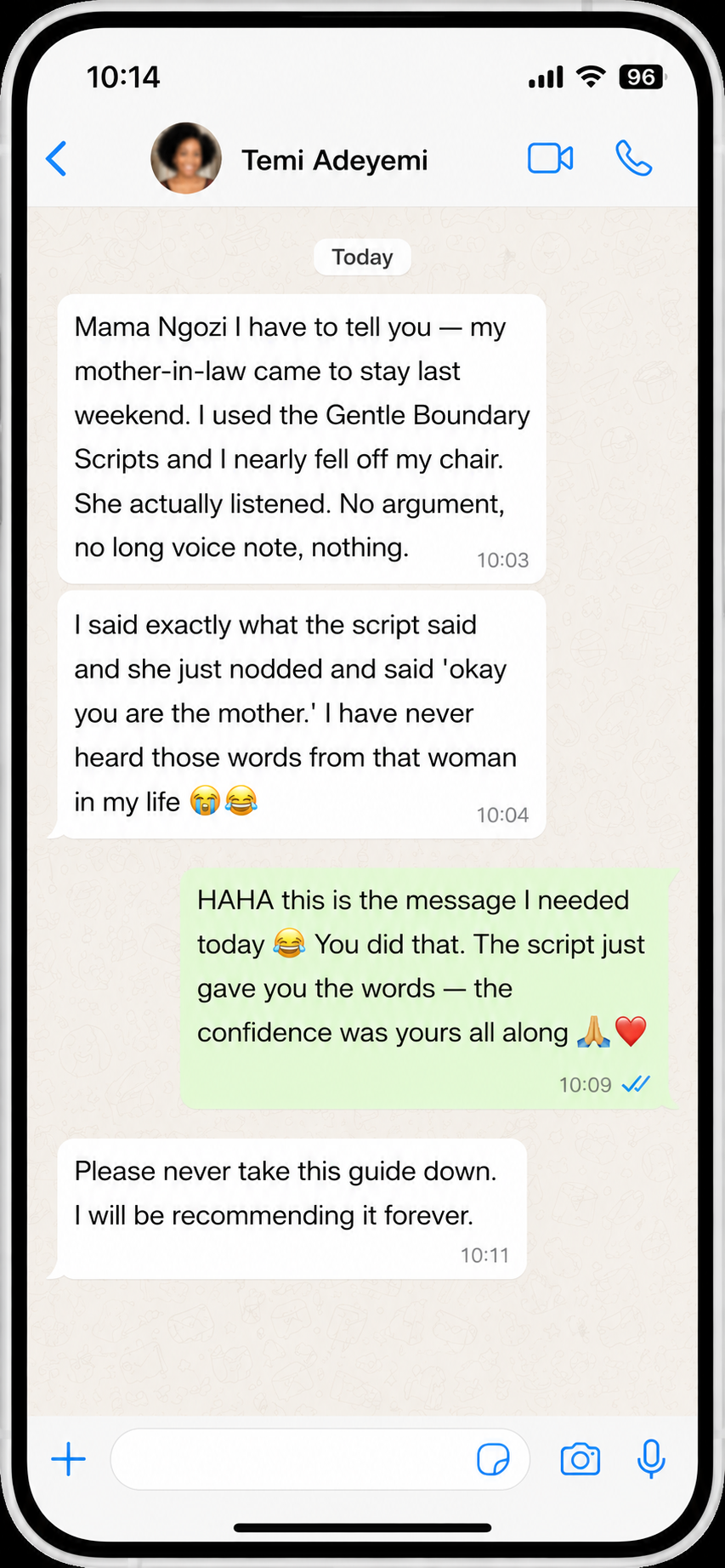
Mama Ngozi's "Sweet Sleep" Secrets + The Out-of-Town Sleep Reset + The Gentle Boundary Scripts. All three delivered instantly to your email the moment your payment is confirmed.
Get The Guide and Free Bonuses Now →More from real buyers
Mama Ngozi's Personal Promise
Follow the protocol. Go through the guide honestly. If you do the work and feel — truly feel — that it was not worth what you paid, send me a message and I will refund you in full. No long process. No difficult questions. No chasing. I know what this guide contains. I know what it did for me and for the women who tested it before I released it. I am not worried about making that promise to you.
Quick Answers
The moment your payment is confirmed, all three items — the main guide and both bonuses — are delivered to your email address as PDF files. No waiting, no app to download. Open it on your phone right now and you can start tonight.
Not at all. The guide covers babies from 6 weeks to 9 months and includes a dedicated section for mothers who are starting later. The protocol adapts to your baby's current age — you will not be following advice written for a newborn if your baby is already sitting up.
No. Not for one minute. The gradual presence fade technique keeps you in the room, close to your baby, throughout. You reduce your involvement slowly over nights — you do not withdraw it suddenly. Many mothers tell me this was the first sleep method they could follow without the guilt that stopped them finishing every other one.
Yes. The protocol itself works anywhere a baby sleeps. The Nigerian Home Adjustments and the bonus materials were specifically written with the diaspora mother in mind — the isolation, the distance from extended family, the way a visit home can disrupt everything, and the particular challenge of raising a Nigerian baby inside a non-Nigerian environment.
Yes. All payments are processed through Paystack — Nigeria's most trusted payment platform. Your card details are fully protected and the transaction is encrypted end to end.
Two Roads From Here
Only one of them leads to sleep. You already know which one.
✅ If You Get The Guide Tonight
✗ If You Leave Without It
You have already tried the free things. You are still awake reading this because none of them worked. This is the thing that works — built for your home, your family, your 3am. For ₦5,000, you can start tonight.
— Mama Ngozi